Or, Why Nobody Has Ever Called Texas's Bluff
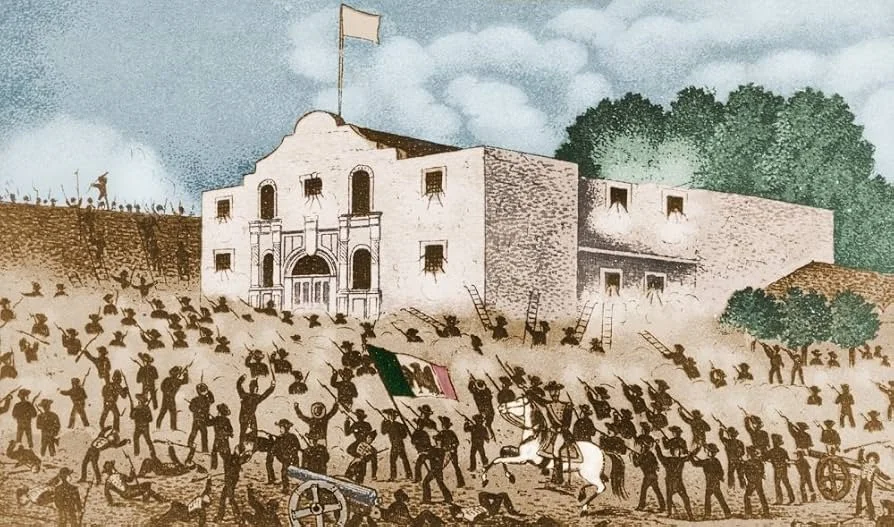
John Steinbeck noticed something about Texas that has aged better than most political commentary. Texans, he wrote in Travels with Charley, claim the right to secede at will. They just, in his exact words, “don't want anyone to want them to.”
This is an entirely different ambition than independence.
Secession, in Texas, functions less as a constitutional theory than as a personality trait. It is not a destination. It is a conversational resource. Like the friend who announces he's leaving the party every twenty minutes, then remains standing in the doorway waiting for someone to object.
The threat works only if nobody accepts it.
Independence, Performed
Texas occupies a peculiar place in the American imagination because it insists on being treated less like a state than like a state temporarily tolerating the inconvenience of being one.
It flies its own flag with unusual enthusiasm. It reminds visitors, unprompted, that it was once an independent republic. It cultivates the agreeable impression that joining the Union was less a permanent commitment than a generous trial subscription that could, if sufficiently provoked, be cancelled at any time.
This is wonderfully theatrical.
Most marriages contain at least one spouse who occasionally announces, “Maybe I should just leave.”
The announcement is rarely about leaving.
It is about being asked to stay.
Prior Experience
Every other state threatening to secede is making a tantrum sound like a policy position. Texas alone gets to make the threat with a straight face, because Texas alone has actually done it — nine years as its own republic, its own currency, its own embassies, before it agreed, magnanimously, to be annexed. Nobody else gets to cite precedent. California can threaten to leave the Union all it likes; it will only ever sound like a startup threatening to go private. Texas gets to sound like a landlord reminding the tenant who originally owned the building.
Precedent isn't something you can manufacture after the fact, and it happens to be the one asset Texas has lying around that nobody else does.
A Mystique, Not a Memo
Part of what makes the performance so durable is that it may not be a performance at all. Steinbeck called Texas “a mystique closely approximating a religion” — the kind of claim people either believe completely or find faintly embarrassing to stand near, with almost nobody landing in between. A Texan outside of Texas, he noted, is a foreigner, which is a strange thing to be able to say about a fellow citizen and have it understood immediately by everyone involved.
A bluff the bluffer half-believes is simply a better bluff. Sincerity is the one bargaining chip a professional negotiator can never quite fake, and Texas has an oversupply of it.
The Fine Print
There is one detail the mystique has never quite figured out how to absorb. In 1869, the Supreme Court settled, permanently, whether a state may unilaterally leave the Union — not hypothetically, and not in a case about South Carolina or Mississippi, but in a case that had to be styled Texas v. White, because Texas was the actual party in the room. The vote wasn't close. No state may secede without the consent of the others; the Union, in the Chief Justice's phrase, is “indestructible.” Texas is not merely a state with a long and colorful habit of threatening to leave. It is the specific state whose name sits, permanently, on the Supreme Court opinion ruling that it can't. Every threat since 1869 has technically been made in the shadow of a verdict with its own name on the cover page.
This has not slowed anything down.
The Bluff
A bluff is one of civilization's more elegant inventions. It allows two people to pretend they are willing to do something neither actually wants to happen.
Texas has been conducting the same bluff for nearly two centuries, one court ruling notwithstanding.
Every few years someone proposes secession with impressive confidence, and everyone else responds with the practiced patience usually reserved for relatives threatening to move to another state after Thanksgiving dinner.
“Oh.”
“Well —”
“Let us know how that works out.”
The conversation survives because nobody follows the script to its logical conclusion.
The worst possible outcome for the performance would be enthusiastic agreement. Imagine Congress issuing a statement reading: “We've given the matter considerable thought. Best of luck.” The movement would collapse under the unbearable weight of success.
The Right to Threaten
Texas seems less interested in actually leaving than in owning the deed to the idea of leaving — the possibility, the option, the constitutional equivalent of sleeping with a suitcase packed, just in case.
There is something deeply American about this. We admire freedom so thoroughly that we occasionally become attached to freedoms we never intend to exercise. The freedom to leave can become more emotionally satisfying than leaving ever could.
Steinbeck's Joke
Steinbeck understood this so well that he proposed founding an actual organization: The American Friends for Texas Secession, whose sole purpose, one assumes, would have been to grant Texas exactly what it claimed to want — immediately, in writing, with a fruit basket.
The name is funnier than the proposal.
It imagines the rest of America greeting the news the way you'd greet a friend's regrettable new haircut — with immediate, slightly too-enthusiastic support. “We support whatever makes you happy.” No pleading. No counteroffer. Just applause, which happens to be the one response the whole performance was never built to survive.
The joke works because it quietly removes the one ingredient the bluff requires. An audience willing to plead.
The Wrong Kind of Yes
There is, admittedly, a worse fate than being taken up on the offer: being taken up on it by the wrong people. Steinbeck's imaginary Friends of Texas Secession, cheering the exit out of pure affection, would at least make for a dignified way to go. Picture instead the actual worst case — a political opponent thrilled to watch a reliably contrarian bloc of electoral votes see itself out, and saying so, cheerfully, without a trace of the reluctance the whole performance depends on. A bluff survives being called. It does not survive being agreed with by someone who was hoping you'd ask.
The State That Never Wants the Last Word
This isn't really about Texas.
Every family has someone who threatens to leave. Every office has an employee who dramatically updates his résumé where everyone can see the tab open. Every dinner party has a guest who stands by the door with his coat on for forty-five minutes, still talking.
Departure, it turns out, is often less interesting than being seen preparing for it. Texas simply institutionalized the habit, reminding the country for two centuries that it could walk away whenever it pleased while remaining comfortably seated at the table — glancing toward the door just long enough to make sure someone noticed the glance.
Strip away the politics and what Steinbeck actually caught was pettier and far more universal than a constitutional theory: some people don't want the freedom to leave so much as the freedom to mention that they could, and the rest of us are expected to look appropriately worried about losing them, on cue, every single time.
Texas already has a Supreme Court case with its own name on it, permanently settling that it cannot do the thing it keeps threatening to do. It has never once treated this as a technicality worth mentioning. Some bluffs collapse the moment someone calls them. This one has survived being formally adjudicated, which is a considerably higher bar, and nobody in Austin seems to have noticed the difference.
The suitcase stays packed. The coat stays on by the door. And the rest of us keep glancing over, generation after generation, waiting to see if this is finally the year somebody looks back and just says: sure — go ahead.