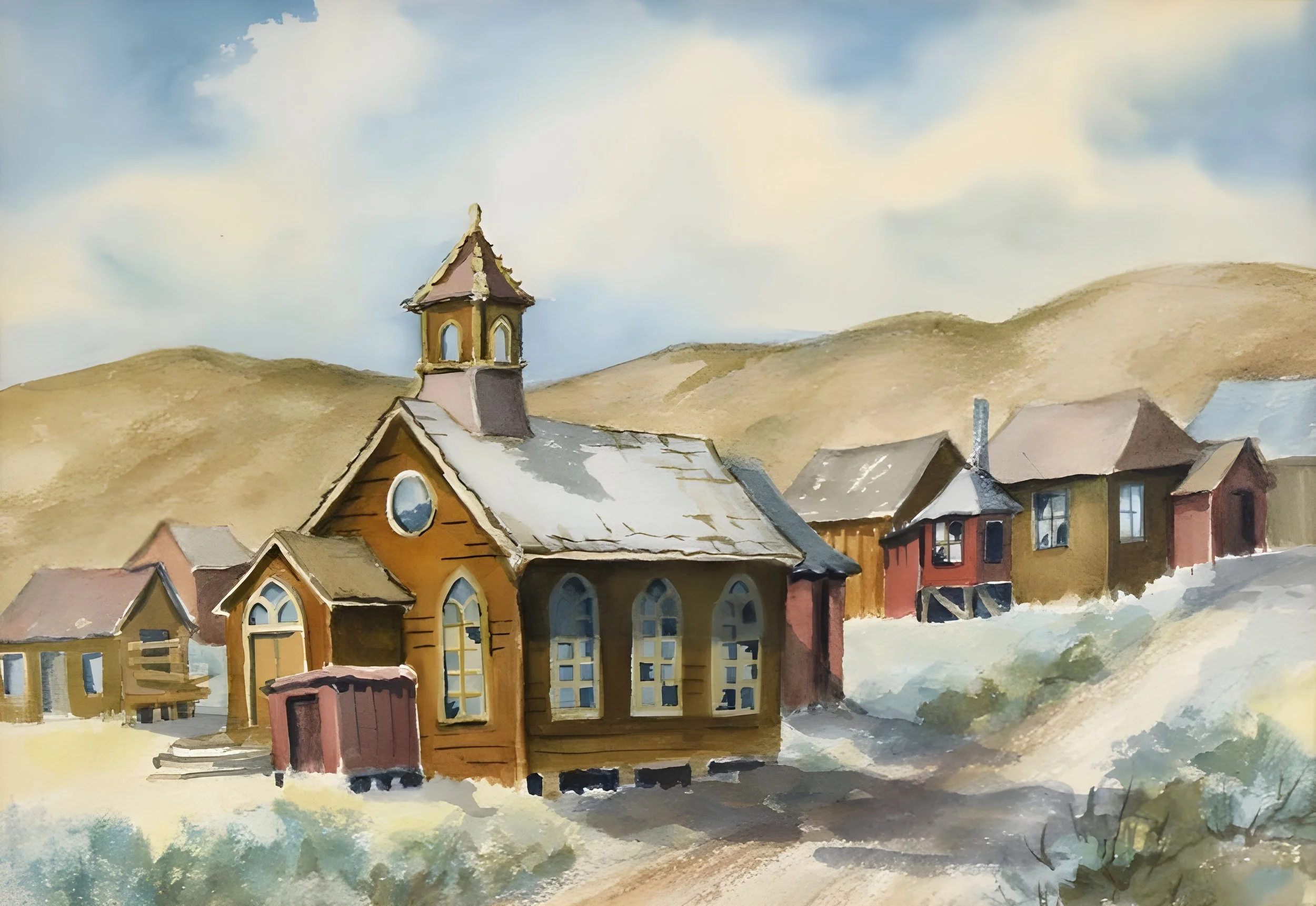
Bodie, California, is a ghost town in the proper sense — abandoned, arrested mid-collapse, kept by the state in a condition officials call "arrested decay," which is either the most honest job title in American parks management or a description of several marriages. At its peak in the 1880s it had ten thousand people, sixty-five saloons, a murder rate that made San Francisco look monastic, and a section of town everyone called the Restricted District, where the women were not restricted from anything so much as fenced off from everyone else's Sunday conscience.
One of those women was named Rosa May. She is now the most famous resident Bodie ever had — more famous than any man who struck gold there, which is its own small irony, since the gold is gone and she is the one people still drive four hours on a dirt road to visit.
Here is what can actually be verified about her: she worked in Bodie's red-light district in the later decades of the nineteenth century, and she is buried just outside the town cemetery, separated from its fence by a stretch of sagebrush that was, at the time, a very deliberate distance. That is essentially the whole documentary record. A woman lived, worked, died, and was buried too far from everyone else. The county has more paperwork on its livestock.
Everything else you may have heard — that she nursed dying miners through a pneumonia epidemic while their own wives wouldn't cross the district line to help; that she caught the illness herself and died of it; that she left behind aching letters to a lover who got away — comes almost entirely from a 1981 book by a writer named George Williams III, who found the record nearly blank and did what writers under deadline and in love with a story have always done: he filled it in. He has said as much himself. The letters were invented. The nursing story, the deathbed pathos — dramatized, in places simply made up, in service of a woman he clearly wanted to have been realer than the county records allowed.
It worked, is the thing. It worked so well that the invention now functions as history. Tour guides recite it. Visitors leave flowers on her grave specifically because of what they believe she did during the epidemic — a kindness that may or may not have happened, performed by a woman about whom almost nothing is actually known, mourned by strangers on the strength of a stranger's fiction. Bodie's most famous resident is, in a real sense, collaborative fan fiction with a body underneath it.
It would be easy to leave it there, filed alongside a marketing pledge and a fictional Founding Beatnik: another case of Americans preferring a well-shaped lie to an unshaped truth. But sit with it a moment longer and the joke changes shape. Because the honest, undecorated truth about Rosa May is not merely thin, it is thin in a specific and telling way: nobody wrote down her interior life because nobody thought her interior life was worth writing down. The men who struck gold in Bodie got memoirs, keepsake photographs, headstones with full names and dates. The women in the district got a district. When someone finally tried to give one of them a fuller story, a century later, he had to invent it, because nothing was precisely what the town, and the century, had left him to work with. The fiction isn't really the scandal. The silence that made it necessary is.
What you are looking at, if you make the drive out past that fence line, is not really a monument to a woman named Rosa May. It's a monument to how little anyone thought to ask about her while she was alive to answer, and how badly, a hundred years too late, people wanted her to have mattered anyway — enough to write her a tender history rather than sit with an empty page. That wanting is not nothing. It may be the closest thing to grief the record allows her: not the truth of who she was, but the shape of everyone who came after, straining to give her one.
The flowers keep arriving, all these years later, from people who never knew her, on the strength of a story that was never quite hers to begin with. Which may be the truest thing anyone has given her: not an accurate account of her life, but the plain, stubborn fact that people kept wanting her to have had one.